
How Bismocin works
Disarming Bacterial Resistance
Iron is essential for bacterial survival and plays an important role in maintaining the proton motive force that drives energy-dependent antibiotic resistance mechanisms.
Bismuth interferes with iron acquisition by competing with iron for binding to bacterial siderophores, particularly pyoverdine in Pseudomonas aeruginosa. This disruption weakens energy-dependent resistance mechanisms, including antibiotic efflux, and restore bacterial susceptibility to existing antibiotics.
Competition for Iron
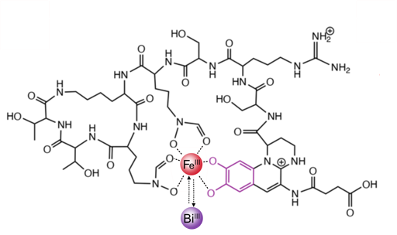
Bismuth interferes with iron binding to pyoverdine, a key siderophore used by P. aeruginosa to acquire iron.
Iron-Dependent Antibiotic Potentiation
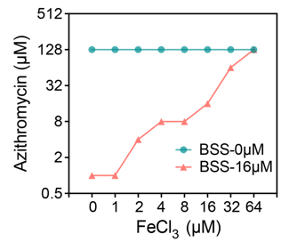
Increasing iron concentrations counteract the bismuth-associated reduction in azithromycin MIC, supporting the involvement of iron competition in the observed potentiation.
Up to 100% Survival in Preclinical Infection Models
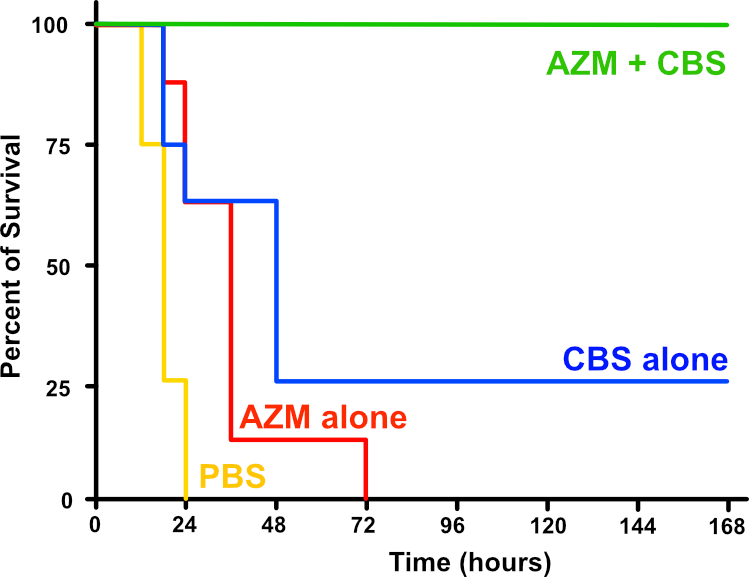
Combining bismuth subcitrate with an antibiotic, here shown with either azithromycin or eravacycline, resulted in 100% survival in these preclinical infection models, compared with substantially lower survival rates for either compound administered alone.
These findings demonstrate the potential of bismuth subcitrate to enhance antibiotic efficacy and improve treatment outcomes against bacterial infections.
Azithromycin (AZM)
Eravacycline (ERV)
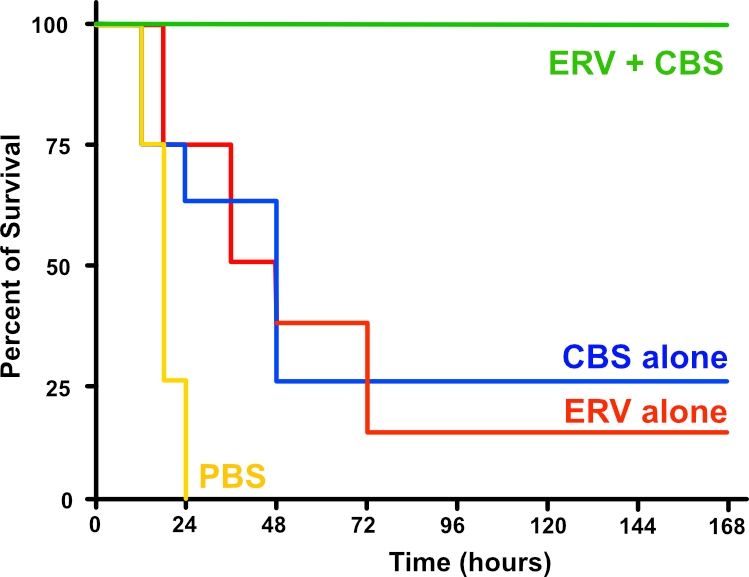
CBS = bismuth subcitrate
A Heavy Metal with a Remarkable Safety Profile
Not all heavy metals are created equal.
Bismuth has been used clinically for decades, particularly in the treatment of Helicobacter pylori infections. Unlike many other heavy metals, bismuth compounds have a relatively favorable safety profile when administered at appropriate therapeutic doses.
Decades of
Clinical Use
A well-established compound, used for over 30 years in the treatment of Helicobacter pylori infections.
Low-Dose Inhalation
Direct delivery to the lungs, using substantially smaller doses than conventional oral treatments.
Encouraging Preclinical Safety
Animal studies demonstrated good pulmonary tolerability, with no observed acute toxicity at the tested doses.
Established clinical experience. Targeted delivery. Encouraging preclinical safety.
FURTHER READING
The Science Behind Bismocin
Explore the peer-reviewed research demonstrating how bismuth compounds restore antibiotic susceptibility in multidrug-resistant Pseudomonas aeruginosa.
Bismuth-based drugs sensitize Pseudomonas aeruginosa to multiple antibiotics by disrupting iron homeostasis
Xia et al. | Nature Microbiology | 2024